
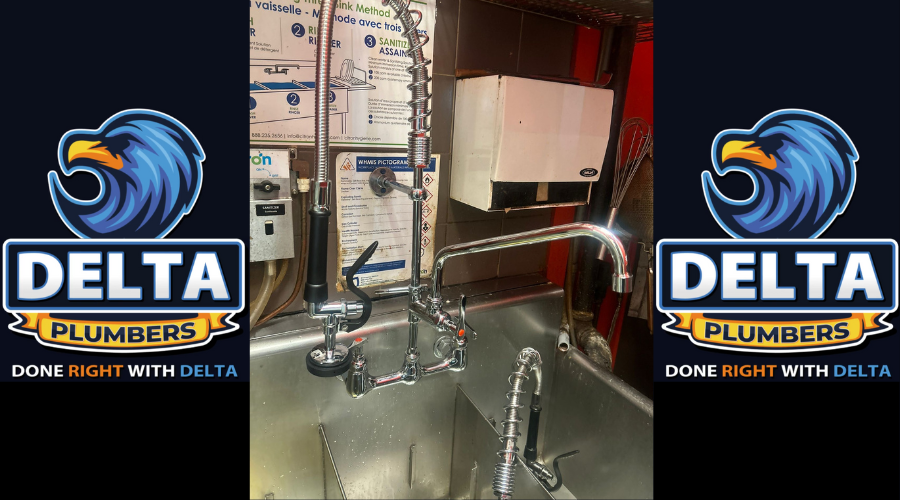
Installing a sink in your laundry room can make your household routines much easier. It provides a space for rinsing, soaking, cleaning, and even filling up buckets without needing to use the bathroom or kitchen sinks. This guide will provide a comprehensive look into the process, costs, and common questions which might you have when you install a laundry room sink.

Picture Source – Delta Plumbers
Can You Install a Sink in a Laundry Room?
Absolutely, adding a sink to your laundry room is a feasible project and can greatly improve its functionality. Here’s a step-by-step breakdown of what’s involved:
Assess Plumbing Access:
Most laundry rooms already have water lines and a drain pipe because they’re set up for washing machines. These existing pipes can often be modified to accommodate a sink, making the installation straightforward. However, the specific setup of your laundry room will determine the complexity.
Determine Sink Size and Placement:
The size and style of the sink should fit your needs and the available space in your laundry room. Utility sinks, which are commonly used in laundry rooms, come in a range of sizes and materials. Some popular choices are heavy-duty plastic, stainless steel, and even ceramic or stone for a more upscale look. The depth and width of the sink should allow you to handle larger items without spilling water.
Gather Tools and Supplies:
Basic plumbing tools like a pipe cutter, wrench, plumber’s tape, and PVC cement are essential. Supplies include PVC or ABS pipes, a P-trap, and possibly a vent extension depending on your local plumbing codes. Purchasing all necessary materials beforehand will streamline the installation process.
Research Permit Requirements:
In many places, installing a new plumbing fixture requires a permit to ensure that the work meets local codes. Some areas might not require one for minor plumbing installations, but it’s worth checking with local authorities to avoid penalties or future issues.
With the right preparation, adding a sink to your laundry room is a rewarding DIY project that enhances convenience and adds value to your home.
Also Read: Professional Water Heater Maintenance

Picture Source – Delta Plumbers
Can a Washing Machine and Sink Share the Same Drain?
Yes, a washing machine and sink can share the same drain, provided it’s properly planned to avoid drainage issues. Here’s what’s involved:
Size and Capacity of the Drain:
Ensure that your drainpipe is large enough to handle water flow from both the washing machine and the sink. Washing machines typically discharge water at high speed and volume, which can overwhelm small pipes. A 2-inch drainpipe is recommended for this shared setup to prevent overflow or clogs.
Trap and Venting:
Both the sink and washing machine need a P-trap to block sewer gases from entering the home and a vent to maintain air pressure in the drain. Without a vent, the water may not flow smoothly, and you could experience gurgling sounds or backups. The vent should be properly positioned to serve both the sink and washing machine, allowing air to escape and ensuring smooth drainage.
Backflow Prevention:
One effective way to prevent backflow is by using a Y-connector to merge the sink and washing machine drainpipes. This configuration allows each appliance to drain separately while sharing the main drainpipe. Installing a check valve can further reduce the risk of backflow, ensuring that water flows only in one direction.
Sharing a drain is common for laundry rooms, but to avoid plumbing issues, it’s crucial to use the correct pipe size and fittings.
Also Read: Same-Day Kitchen Sink Installation

Picture Source – Delta Plumbers
How Much Does It Cost to Put a Sink in a Laundry Room?
The cost of installing a laundry room sink depends on several factors, including the sink style, materials, and whether you hire a professional or do it yourself. Here’s a breakdown of what to expect:
Sink and Material Costs:
Utility sinks range widely in price. A basic plastic or resin sink can cost around $100 to $200, while stainless steel and stone options range from $200 to $500 or more. Consider the durability and purpose of the sink. Stainless steel is more durable and resistant to stains, while plastic is lightweight and budget-friendly.
Labor Costs:
If you’re hiring a plumber, expect labor costs between $50 and $150 per hour. Installing a laundry room sink typically takes between 2-4 hours, depending on the complexity of the plumbing and any additional modifications. Plumbers also ensure compliance with local plumbing codes, so while it’s an added expense, it can be worthwhile if you’re unfamiliar with plumbing.
Additional Expenses:
Extra costs may arise if new plumbing lines or electrical work are needed. For example, if your washer drain is not suited to handle a sink, adding a dedicated line for the sink could increase costs. Venting, which may be required by code, can also add to expenses if it’s not already installed in the laundry room.
In general, a simple DIY installation with a basic sink may cost $250-$500, while a more complex installation requiring professional help can reach $1,000 or more.
Also Read: How to Fix a Leaking Hose Bib: A Comprehensive Guide by Delta Plumbers

Picture Source – Delta Plumbers
Can You Connect a Utility Sink to a Washer?
Yes, connecting a utility sink to share the washer’s drainage can save space and simplify plumbing. Here’s what you need to know:
Drain Sharing:
Connecting the sink to the washer’s drain means they’ll share the same water outlet. In many cases, this can be a cost-effective solution as it minimizes additional piping. However, it’s essential to have a high-capacity drain pipe to accommodate both the sink and washer discharge.
Use of Diverter Valves:
A diverter valve can help direct the flow of water between the sink and washing machine. This can be useful if you want to prioritize one fixture’s use over the other. Diverter valves are affordable and easy to install, helping you control drainage flow and reduce the risk of backflow.
Choosing the Right Sink:
For this setup, a deep utility sink that can handle large amounts of water is best. The high capacity helps prevent spills if you’re discharging large volumes of water quickly, such as from soaking laundry or other cleaning tasks.
Connecting the sink to the washer’s drain simplifies installation and is a functional setup for most laundry rooms.
Also Read: Broken Garburators: A Complete Guide on How to Deal With

Picture Source – Delta Plumbers
Does a Laundry Sink Need a Vent?
Yes, venting is essential for a laundry sink. Here’s why:
Importance of Venting:
Vents equalize air pressure in the drain pipes, which helps water flow efficiently and prevents sewer gases from escaping into your laundry room. Without proper venting, you may encounter slow drainage, gurgling noises, or even the possibility of water being siphoned from the sink’s trap, allowing sewer odors into your home.
Venting Options:
If your sink is near an existing vent stack, you may be able to tie into that vent, simplifying the process. If not, air admittance valves (AAVs) offer an alternative. These mechanical vents open to allow air in when water flows and close to prevent sewer gases from escaping. They’re easy to install and provide an effective venting solution when traditional vents aren’t feasible.
Local Plumbing Codes:
Many plumbing codes require venting for all sinks, especially in laundry rooms. Checking with local regulations or consulting a plumber ensures compliance with these requirements.
A vent is vital to prevent clogs and odors, and it’s often a requirement for plumbing code compliance.
Also Read: The Role of Plumbing in Smart Homes

Picture Source – Delta Plumbers
Does a Laundry Sink Need an Overflow?
While not mandatory, an overflow can be useful. Here’s a look at its benefits and considerations:
Safety and Overflow Protection:
An overflow feature helps prevent water from spilling over the sink edge. This is especially useful if you’re soaking clothes or filling the sink and get distracted. Overflows are a common feature on bathroom sinks, but they’re not as common on utility sinks, which are typically larger.
Code and Design Requirements:
Check local codes, as some may require overflows for larger sinks or in homes with specific plumbing regulations. An overflow can be particularly beneficial if you live in an area prone to drainage issues or plan to leave the sink unattended at times.
Other Safety Options:
An automatic shutoff faucet is another good solution if an overflow isn’t feasible. This device limits water flow to the sink, reducing the risk of overflow and potential water damage.
While optional, an overflow can add peace of mind, especially in busy households.
Also Read: How to Repair a Broken Pipe: A Complete Guide by Delta Plumbers

Picture Source – Delta Plumbers
How Do You Connect a Washing Machine Waste Pipe to a Sink?
Connecting a washing machine waste pipe to a sink drain is a straightforward process if done correctly. Here’s a step-by-step guide:
Position the Sink Near the Washer Drain:
Placing the sink close to the washing machine will make the connection simpler. Measure the distance from the washer to the sink to ensure accurate pipe lengths.
Install a Standpipe for the Washer Drain:
A standpipe is required for washing machine drains to handle the high volume of water they discharge. It should be at least 18 inches tall and connected to a P-trap. Position the standpipe close to the sink’s P-trap for a streamlined connection.
Use a Y- or Wye Fitting:
Connect the washer drain and sink drain with a Y-fitting. This setup will allow each fixture to drain into the same pipe without backflow or clogging. Using hose clamps can secure the pipes and prevent leaks, making it essential for shared drainage systems.
Venting for Smooth Drainage:
As with other setups, proper venting is essential to prevent issues. Ensure that the sink and washer have access to a vent, either from an existing stack or through an air admittance valve.
With the right setup, a washing machine and sink can share a drain while maintaining smooth and efficient drainage.
Conclusion –
Installing a sink in your laundry room can add convenience and functionality, making household tasks more manageable. This project can be done as a DIY task or with professional help, depending on your plumbing knowledge and the complexity of your setup. By following this guide, you can create a more efficient, user-friendly laundry space.